Orange County vector control

People on non-toxic Studio City (facebook) have started becoming concerned about aerial spraying for zika in Los Angeles

Good for them! But reading some of their posts has brought back memories of my attempt to communicate with Orange County vector control. Below is a transcript of that interaction but briefly: I looked at their sources, their references for why they needed to spray and the only one that was even valid was from 1964

1964! and I questioned how it was even done and got a response that was nothing but a bunch of gobbledygook. They sent a bunch of pointless and illogical references to “prove their point”. I’ll call them idiots. Apparently they can’t even analyze their own data sources and insist that they have to spray everyone’s backyard organic garden.

[Transcript]
From: me
Date: Aug 16, 2016 12:39 PM
Subject: quote about mosquito egg desiccation
To:
Cc:

Xxx

I hope you are well! I may have been the instigation for questions regarding your quote about mosquito egg desiccation in the Orange County Register. I hope you didn’t take it personally. I received a copy of your response where you gave the following reference
>
> http://onlinelibrary.wiley.com/doi/10.1111/jvec.12167/full

>
Your above reference is primarily about relative humidity factors but gives the following reference for mosquito egg survivability upon desiccation

Desiccation resistance has been explored in Ae. aegypti, with eggs surviving up to eight months (Meola 1964).

1964??? Nothing better :-)

This reference is unfortunately seriously flawed. The authors state that. …

All the eggs collected were assumed to
correspond to Ae. aegypti because this is the only container breeding Aedine mosquito species in this region

Mosquitoes hatching were _assumed_?? to be Ae. aegypti. Rates were as low is 2 – 7% and none of the hatching larvae were tested genetically for being Ae. aegypti

OMG One way of looking at this is simply that this was a selection for contaminating mosquito eggs.

There have been other studies involving desiccation but the ones I have looked at have serious issues as well.

Your primary reference above used high relative humidities in most cases. It also looked at saturation deficit of the ambient air.

Survival times of mosquito eggs appear to be reliant not only on relative humidity, but more specifically, the saturation deficit of the ambient air. This measure of atmospheric moisture takes the temperature-dependent water-holding capacity of air into account. The comparative desiccation studies by Sota and Mogi (1992) revealed eggs of the various Aedes species had higher survival rates at low saturation deficits and decreased survival rates at higher saturation deficits. The importance of saturation deficit on mosquito vectors is reflected in simulation modeling by Focks et al. 1993 who found that high humidity is correlated with high rainfall and temperature

I’m not sure that high humidity and high rainfall is a common anual occurrence in Southern California :-) (Maybe in Florida!)

I am sure that you are passionate about keeping us safe from mosquitoes here in Southern California but I am concerned that the chemicals are doing more damage than the mosquitoes. I personally use my PhD in microbiology to raise dragonfly larvae :-)

Best to you

[End of transcript]

And the response I got was complete trash. They aren’t interested in doing something for a reason they just want to promote their own jobs. And keep you from having an organic garden in your own backyard by spraying the snot out of us by airplane and helicopter.

sigh

Spread the Good News Below: Permaculture!

Posted in Uncategorized | Leave a comment

Mom’s exposure to toxic chemicals shows up in newborn – Futurity

[Some] women show widespread exposure to environmental toxins—and levels are often even higher in their newborn babies.

Source: Mom’s exposure to toxic chemicals shows up in newborn – Futurity

It is easy to postulate that some of these herbicides and insecticides have a higher incorporation in growing cells. This would explain the higher levels in infants but it would also suggest a likely impact on our immune systems since our immune systems require growing cells.

The sloppiness of herbicide toxicity studies by the big chemical companies is criminal in my opinion. I can grow much of what I eat and a pond or swimming pool converted to non-chlorine is a great food resource.

Spread the Good News Below: Permaculture!
Posted in Uncategorized | Leave a comment

Copper based algaecides

Copper is a toxin that is often used to kill algae in swimming pools or ponds. Here, I will focus on its use in ponds as I have discussed its use in pools here.

Since copper in solution is a blue color which tints the water, it gives an impression of purity. But it is only appearances. Maybe we could start thinking that green is clean. If your pond or pool can support algae the water is far less likely to mutagenize you and be toxic.

Copper is a toxic metal and even more importantly it is a phototoxin.
www.sciencedirect.com/science/article/pii/S0147651312002783

Phototoxins interact with light energy and transmit that energy in a harmful manner to living cells often killing them. If you add enough copper that it kills algae, it has a toxic effect on life, and almost certainly on you as well.

Dillute copper solutions and sunlight damage DNA extensively and cause cell death. I did my PhD work on this chemical reaction. And it is this reaction which is probably the reason copper kills algae. A copper solution in the absence of light has much less effect on DNA but is somewhat toxic. Solid metal copper is pretty safe for use in our water pipes.

If you are swimming in your pond, it is generally on a nice sunny day, not cloudy and overcast. Do you really want to be putting a _light activated_, DNA-damaging toxin in your pond water?

Copper ultimately, accumulates within the sediment layer and kills off a variety of beneficial life-forms such as:
1) insects and their larvae (dragonflys and damselflies — bees coming to drink).
2) crayfish and most of the other beneficial small aquatic arthropod ecology.
3) mollusks and other filter feeders. These would actually help keep the pond clear if they weren’t killed.
4) many, many beneficial bacteria and fungal populations.

The result of which is a damaged and weakened pond ecology.

Other points to consider:
1) Copper Sulfate has a short term effectiveness and is often misused and overused.
2) Copper remains in the pond and does not bio-degrade.
3) Copper is toxic to fish and other organisms.
4) Copper sulfate results in copper build up in pond sediments and creates a sterile bottom in the pond.
5) Copper can contribute to rebound blooms of problematic algae.
6) Copper sulfate is sold as a fine granular solid and its application is hazardous due to inhalation of dust particles.
7) If a heavy buildup of copper sulfate exists where dredging is to occur, the dredged materials may be considered by governmental agencies to be hazardous waste making disposal harder and more expensive.

The general reason copper and other algaecides kill algae is that _these chemicals are toxic_. And they are also toxic to you and your loved ones.

Bob

Spread the Good News Below: Permaculture!
Posted in Uncategorized | Leave a comment

Recent Facebook post in NonToxic San Clemente

So cool :-)
m.facebook.com/groups/1786277901586719?view=permalink&id=1812296648984844&_rdr
Bob 310 429 8477 www.PuraVidaAquatic.com

Spread the Good News Below: Permaculture!

Posted in Uncategorized | Leave a comment

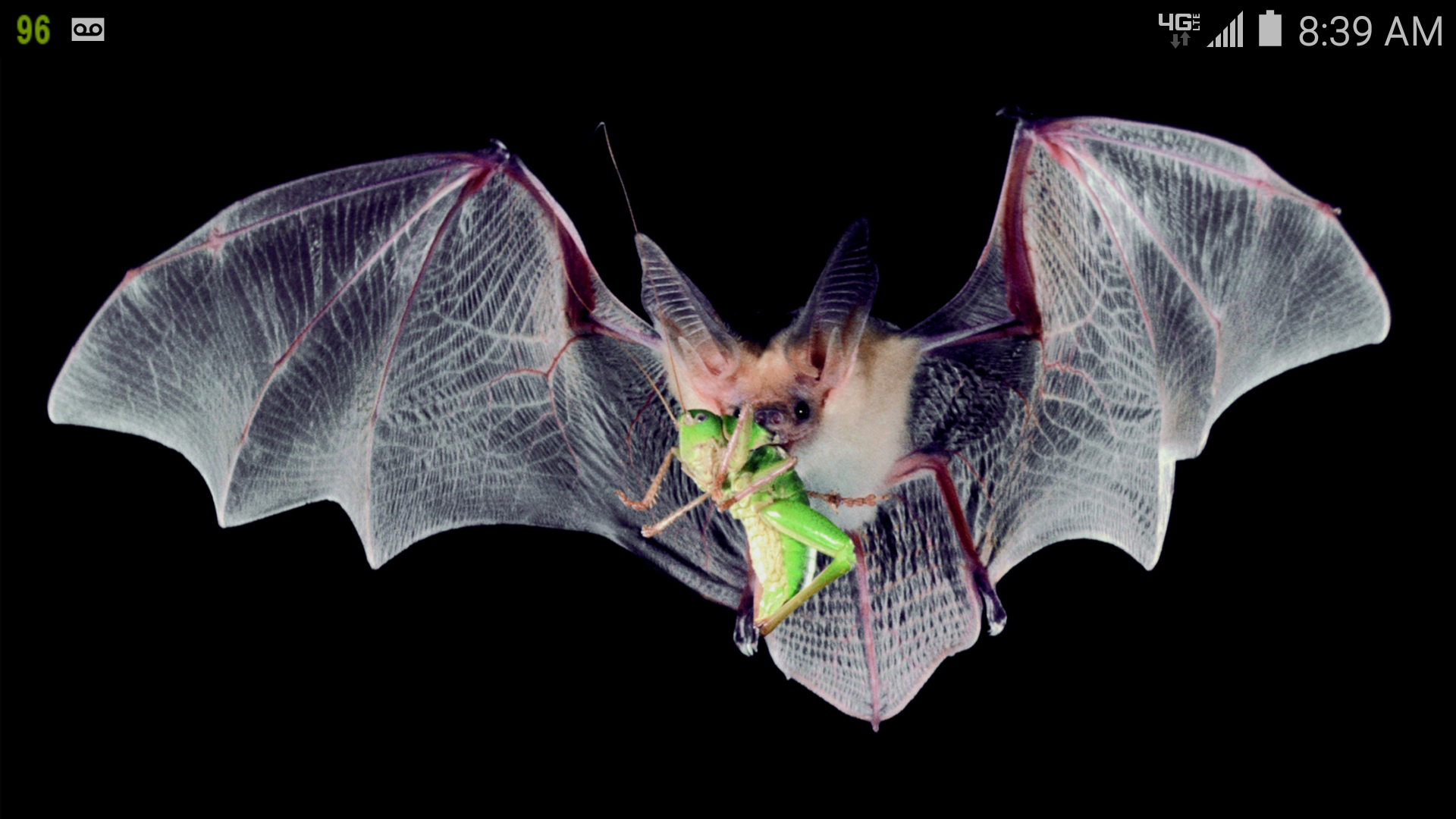
It’s National Bat Week!

Source: http://www.batcon.org/index.php/resources/media-education/bats-magazine/bat_article/168
Most bat species, however, have longer, narrower wings and far less maneuverability. They need access to long swoop zones and large, open water sources.

Analysis of data collected by bat biologists around the West indicates that most bat species prefer sources that are at least 10 feet (3 meters) long and 2.5 feet (0.75 meter) wide. Some species apparently require tanks or rivers with stretches of open water at least 50 feet (15 meters) long, and a few of the least maneuverable species need 100 feet (30 meters).

screenshot_2016-10-26-08-39-02
It’s National Bat Week :-)

A Pool2Pond conversion creates a wonderful habitat and water source for our native bats.

Spread the Good News Below: Permaculture!

Posted in Uncategorized | Comments Off on It’s National Bat Week!

The art of the possible

Ponds support and attract lots of Wildlife :-) Bob 310 429 8477 www.PuraVidaAquatic.com

Spread the Good News Below: Permaculture!

Posted in Uncategorized | Leave a comment

Just where do you think those herbicides and pesticides sprayed last year are now?

So I was driving down the street and I saw a team mowing a dry parkway.
20161014_084544

And I started to think about what was on all that dust they were spraying into the air.
20161014_084317

Besides all the herbicides and pesticides that they had applied during the summer.

www.PuraVidaAquatic.com

Spread the Good News Below: Permaculture!

Posted in Uncategorized | Leave a comment

America’s Dairy Farmers Dump 43 Million Gallons of Excess Milk

Dairy farmers in the U.S. are pouring out excess milk at the highest rate in decades, amid a glut that has slashed prices and has filled warehouses with cheese.

Source: America’s Dairy Farmers Dump 43 Million Gallons of Excess Milk

I am numb.

Spread the Good News Below: Permaculture!

Posted in Uncategorized | Leave a comment

Robotic Bees Are Now Being Built To Pollinate Crops Instead of Real Bees

Source: Robotic Bees Are Now Being Built To Pollinate Crops Instead of Real Bees

Honeybees pollinate almost a third of the food we consume, but they’ve been dying at alarming rates due to threats like habitat loss and disease, as well as colony collapse disorder (CCD), the phenomenon where worker bees abandon their hives, leaving behind only the queen bee and enough food and nurse bees to help take care of the immature […]

Yes but can they make honey :-)

Spread the Good News Below: Permaculture!
Posted in Uncategorized | Leave a comment

Toxins with short half lives are OK — Not!

20151226_102514

Chemical Company salesman manipulate half-life determinations to their own ends. Chemicals don’t simply evaporate at their half life time. It is what they break down into that is also critically important. DDT has a half life as little as 22 days.

So the chemical companies can say that in as little as 22 days, half the DDT is gone. And in 8 times 22 days or, just over six months, it’s all gone.

But it is not! DDT breaks down in “as little as 22 days” _into DDE_. The DDT is gone but DDE remains. And they know it. And DDE is thought to be more toxic and longer-lived than original DDT.

In particular it is the DDE that caused the bird egg shell thinning.

Source: https://en.m.wikipedia.org/wiki/DDT#Environmental_impact

The biological thinning mechanism is not entirely understood, but strong evidence indictates that p,p’-DDE inhibits calcium ATPase in the membrane of the shell gland and reduces the transport of calcium carbonate from blood into the eggshell gland. This results in a dose-dependent thickness reduction.[1][61][62][63]

Also

Source: https://en.m.wikipedia.org/wiki/Dichlorodiphenyldichloroethylene

DDE is particularly dangerous because it is fat-soluble like other organochlorines, thus it is rarely excreted from the body and concentrations tend to increase throughout life. The major exception is the excretion of DDE in breast milk, which delivers a substantial portion of the mother’s DDE burden to the young animal or child.[3] Along with accumulation over an organism’s life, this stability leads to bioaccumulation in the environment which amplifies DDE’s negative effects.

Spread the Good News Below: Permaculture!
Posted in Uncategorized | Leave a comment