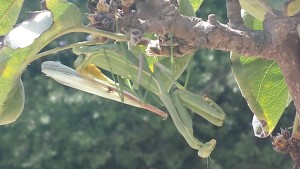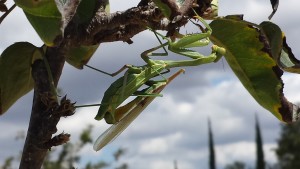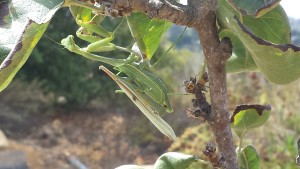
Photo of the Week: Mosquito Pollinators – National Wildlife Federation

National mosquito day huh :-) And I really, really, want elephant mosquitos at my place which since the picture was taken in Texas ….

Maybe http://www.nwf.org/News-and-Magazines/National-Wildlife/PhotoZone/Archives/2015/photo-of-the-week-07-21-2015.aspx

http://www.PuraVidaAquatic.com

Spread the Good News Below: Permaculture!
Posted in Uncategorized | Leave a comment

Turn Your Pool Into a Pond, and Help Restore Wetlands! | Vegetariat

http://www.vegetariat.com/2015/07/turn-pool-pond-restore-wetlands/ An article someone wrote about me.

Makes me sound much better than I am :-) Bob http://www.PuraVidaAquatic.com

Spread the Good News Below: Permaculture!
Posted in Uncategorized | Leave a comment

Blue carbon

Blue carbon is a term permaculturists should begin to look for and understand. In fact it is one of my many goals when I encourage people to convert their swimming pools to a natural filtration system. Google it after reading a quick summary below.

The best to everyone

Bob

Source
By Dick Kempka It’s likely most people have never heard the term blue carbon. When carbon is stored in coastal wetland ecosystems, including tidal marshes, mangroves and seagrass, it becomes known as blue carbon. Amazingly, blue carbon ecosystems remove four times more carbon dioxide from the atmosphere, per acre, than forests. This means healthy coastal wetlands are considered a carbon sink, and restored wetlands are a largely unrealized solution to the problem of increasing worldwide carbon dioxide levels. In fact, on a per-acre basis, coastal habitat restoration and conservation can provide among the greatest climate benefits compared to forest or all other land-use projects.

We shouldn’t necessarily focus on saltwater wetlands either. Freshwater wetlands are similar and California has lost an estimated 99% of them. We have destroyed the very things that could have buffered climate change. We need to get them back as quickly as possible. And in addition we should be protecting our existing old growth wetlands far far better than we are.

Best to you all!
Bob

Spread the Good News Below: Permaculture!
Posted in Uncategorized | Leave a comment

Blue Carbon Rising

Here is an interesting article on wetlands being one of the best carbon sinks around. http://www.triplepundit.com/2015/06/blue-carbon-rising/ Bob 310 429 8477 http://www.PuraVidaAquatic.com

Spread the Good News Below: Permaculture!
Posted in Uncategorized | Leave a comment

A wetland news article

I picked this up because of the term wetland in it. Quote When Governor Jerry Brown declared a state of emergency in Santa Barbara on May 20 following the disastrous Refugio State Beach oil spill, he gave several government agencies specific instructions on how to help. < snip > Brown told the California Conservation Corps, the Department of Forestry and Fire Protection, and CaliforniaVolunteers to coordinate with the Office of Emergency Services and OSPR to mobilize volunteers and “utilize all available resources to support the response, cleanup and mitigation.” < snip > !!! And he told the California Coastal Commission to suspend its environmental protection activities. < snip > Brown’s declaration suspended Chapter 7 of the Coastal Act, which provides important protections for sensitive habitat areas and wetlands End quotes And I believe that the suspension is state wide! The environmentalists argued that with… Quote more than 40 miles of the coast fouled with oil, at least 80 dead birds and 45 dead marine mammals, two popular State Parks closed and 138 square miles closed to fishing. Now is the time when we need the greatest possible protections for the coastal environment, not a weakening of California’s signature coastal protection law.” End quote So …. We are going to clean it up and mitigate the damage. Coastal protections have been voided. Apparently the oil companies benefited more from the “state of emergency” than anyone else. Bob 310 429 8477 http://www.PuraVidaAquatic.com

Spread the Good News Below: Permaculture!
Posted in Uncategorized | Leave a comment

Syngenta Monsanto

Quoted from Syngenta website Syngenta is a world-leading agri-business committed to sustainable agriculture through innovative research and … ‎Careers – ‎Commitments – ‎Syngenta India Business – ‎Syngenta in the UK and Ireland You visited this page on 5/6/15. End quote Quoted from Bloomberg Business website http://www.bloomberg.com/news/articles/2015-05-01/monsanto-syngenta-mega-merger-would-drive-more-deals-real-m-a Monsanto has approached Syngenta about a takeover that would create a giant in the market for seeds and crop chemicals with more than $30 billion in revenue. Getting a deal approved by regulators won’t be easy — and may not happen at all. To address antitrust issues and help its case, Monsanto has planned for a deal to include a sale of parts of the combined business, a person familiar with the matter has said. The biggest concerns may be tied to what would be an unprecedented market share in soybeans and corn seeds for the combined company. Syngenta’s operations in those areas would appeal to a range of buyers from Dow Chemical Co. to BASF SE and Bayer AG, said Colin Isaac of Atlantic Equities LLP. End quote Apparently Hawaii specifically Kauai County is battling Syngenta over pesticide use Gary Hooser, Kauai County Councilman, Writes in http://m.thegardenisland.com/news/opinion/guest/a-simple-ask-of-our-good-neighbor-syngenta/article_107399ca-94ec-5aff-93e5-5f198fe4fd87.html?mode=jqm Quote So long as the agrochemical companies remain in denial and attack mode, we will get nowhere. Many point to the importance of fact-based decision making so here are some facts: 1) Atrazine is banned in Syngenta’s home country of Switzerland. One can quibble with the words but it is illegal to use atrazine on agricultural fields in Switzerland. Atrazine is banned because it is known to contaminate ground water. 2) Paraquat is banned in Syngenta’s home country of Switzerland and in 36 countries around the world. Paraquat is highly toxic to animals and humans. 3) Syngenta distributes and uses atrazine and paraquat on Kauai and throughout Hawaii. 4) In 2014, over 66,000 pounds of atrazine and nearly 8,000 gallons of paraquat was used in Hawaii. 5) Syngenta refuses to disclose the amount of glyphosate it uses on Kauai. 6) According to Scientific American Magazine and numerous other science journals, glyphosate was recently declared a probable human carcinogen by the cancer research arm of the World Health Organization. 7) Glyphosate is now is being banned or highly restricted in numerous countries around the world. For those that are interested, I suggest reading the Feb. 23, New York Times article by Dan Hakim entitled, “A Pesticide Banned, or Not…” This article fully explores Syngenta’s history of misrepresenting to the media worldwide the fact that atrazine is banned in Switzerland, their home country. End quote The US is reported to produce and sell DDT to third world countries. It is obscene and immoral to sell material that are designated too toxic to use in your country, to other countries. It is immoral and obscene to spray material over large areas of land and refused to disclose how much. Too bad we can’t get somebody from WikiLeaks to target the agrochemical companies. And remember that Syngenta and Monsanto are committed to sustainable agriculture. Bob310 429 8477 http:// www.PuraVidaAquatic.com

Spread the Good News Below: Permaculture!
Posted in Uncategorized | Leave a comment

Mobile Web – News – California drought likely a fixture, says Stanford study

http://www.mercurynews.com/drought/ci_27625258/california-drought-likely-fixture-says-stanford-study San Jose Mercury News By Lisa M. Krieger lkrieger@mercurynews.com Monday, March 2, 2015 – 12:01 p.m. Two piers lay on the shoreline at Shadow Cliffs Regional Recreation Area in Pleasanton, Calif., on Friday, Jan. 9, 2015. The man-made lake’s water level remains at historically low levels, about 10 feet below normal for the winter season. (Doug Duran) Human-caused climate change is increasing drought risk in California — boosting the odds that our current crisis will become a fixture of the future, according to a major report Stanford scientists released Monday morning. The new study looked at data — both backward and forwards, in time — to understand the influence of greenhouse gases on California’s past, present and future. “What has happened in California has been a clear warming trend over the historical record … that probably would not have happened without humans,” said Stanford climate scientist Noah Diffenbaugh. The continuation of this global warming “will result in more frequent occurrences of high temperatures and low precipitation that will lead to increased severe drought conditions,” said Diffenbaugh. The research is published in the March 2 issue of the journal Proceedings of the National Academy of Sciences. The news comes on the eve of this winter’s third manual snow survey, taken atop the Sierra on Highway 50 and the. Other readings, taken electronically, reveal that statewide water content is just 19 percent of the historical average for the date. Advertisement Also adding to the drought’s growing threatt, one weather agency is reporting that many Bay Area cities have broken records for the warmest winter in history. Average temperatures for December through February — the meteorological, not astronomical, winter — were 54.44 degrees in San Jose, up from the 54.42 degree record of 1996, and 57 degrees in San Francisco, up from 55.70 degree record of 1970, according to Jan Null of Saratoga-based Golden Gate Weather Services. In our current drought, we’re experiencing the lowest calendar-year precipitation, the highest annual temperature and the most extreme drought indicators on record. On Monday morning, the state Department of Water Resources said that it would increase this year’s State Water Project allocation to 20 percent, up from 15 percent last year, thanks to December and February storms. But that’s a far cry from full 100 percent — last achieved in 2006. The Stanford team doesn’t offer specific recommendations, but says their findings could help California water managers and state officials plan for the future. They previously reported that the conditions behind our current drought — a high pressure system parked over the Pacific Ocean, diverting storms away from California — are much more likely to occur in the presence of concentrations of greenhouse gases. The new study goes further. Using a recently released trove of 120 years of historical data, they found more than a doubling of the frequency of drought years. There were six droughts in past 20 years (1995-2014), compared to 14 droughts in the previous 98 years (1896-1994.) What’s happening? Imagine two coin flips, said Diffenbaugh, associate professor of Environmental Earth System Science at Stanford. Until recently, temperature and precipitation were uncoupled, occurring independently of each other. So each would come up either heads (warm) or tails (dry) half the time. Drought conditions — both heads and tails (warm and dry) — would be seen one-quarter of the time. But climate change means that the coin is landing on tails — warm weather — most of the time. So even if precipitation stays constant, the combination of both warm and dry conditions is more common. Not only is there little rain, but there’s more melting of snow and increased water loss from soils and plants. “Low precipitation isn’t enough to create a drought. The key difference is temperature,” said Diffenbaugh. And that’s what is changing. The team doesn’t have data for the future, of course, and it’s impossible to run a real-world experiment. So they created climate simulations to peer into the future. Their models show that the warming trend is likely to continue, boosting the odds that a heads-tails coin toss — co-occurring warm and dry years, creating drought — will climb in the coming decades. Droughts have occurred throughout California’s pre-human history, just as the coin toss example would predict, they say. And nature creates its own variability, with volcanic eruptions and solar fluctuations. But steadily rising temperatures — caused by burning fossil fuels and clearing forests — increases the probability of such conditions, they found. “Continued global warming will result in more frequent occurrences of high temperatures and low precipitation,” said Diffenbaugh, “leading to more of the severe drought conditions that we’ve been experiencing.” Contact Lisa M. Krieger at 650-492-4098. Share on Facebook Share on Twitter Share on LinkedIn Marketplace © 2015 Digital First Media v. 0.977 Contact Us Privacy Policy Copyright View Desktop Site Bob 310 429 8477 http://www.PuraVidaAquatic.com

Spread the Good News Below: Permaculture!
Posted in Uncategorized | Leave a comment

Gopher composting!

http://www.vegetariat.com/2015/02/compost-gophers/ This is a wonderful blog about discouraging Gophers without toxins. I have gone the same route, but I deliberately let my food scraps ferment for a week or so. I fill a 5 gallon bucket half full of table scraps, put in enough water to just begin to see liquid below the top veggies, and then put a second 5 gallon bucket on top with sometimes a little weight. In a week there is plenty of liquid from the breakdown of the scraps, whereupon I take a paint stirrer that I put some edges on with a grinder and puree it. A little extra water if needed and …

Old bread works great as in the picture.

I then pour it through an old milk crate into a tub and from the tub back into the bucket. This screens out large pieces that would plug the hole rather than flow into it.

Now pour it down the holes.

I am exceedingly happy with the results. And as the original blog post points out, I am fertilizing at the same time as discouraging the Gophers from digging in certain areas. I am perfectly happy to let the Gophers have other areas of the property. Just not underneath the trees :-)

Spread the Good News Below: Permaculture!
Posted in Uncategorized | Leave a comment

Earthweek: A Diary of the Planet

> > Quote > GRASSROOTS > Earthweek: A Diary of the Planet > > Courtesy of Earthweek.com > Earthweek: A Diary of the Planet > Birds vs. Fish > > Two sets of conservationists in the western United States are at odds over plans to kill 11,000 double-crested cormorants on Oregon’s East Sand Island to protect endangered juvenile salmon and steelhead trout from the Columbia River. > The Army Corps of Engineers is preparing to cull the live birds with shotguns and pour oil on the nests of about 26,000 birds to prevent their eggs from hatching. > The move has drawn criticism from the Audubon Society of Portland and Care2. > The Columbia River Inter-Tribal Fish Commission counters that it’s hard enough for the fish to make it through a network of dams on the river without being eaten up by a large number of cormorants at the river’s mouth. > “This is a difficult situation,” said Corps spokeswoman Diana Fredlund. “We are trying to balance the salmon and steelhead versus the birds.” > End quote > > I am so angry I don’t know what to do. So we destroy the fish population by our poor behavior and decide to kill the birds to repair our poor behavior. And humans are the most intelligent animal on earth. sigh > > And on a happier note. > > quote > Croc Fun > A crocodile may not seem like the best choice for a human playmate, but research reveals the reptiles do love to have fun. > Vladimir Dinets, a zoologist at the University of Tennessee, says he found that crocs can form powerful and playful relations not only with their own kind, but also with species like river otters and even humans. > “A man who rescued a crocodile that had been shot in the head became close friends with the animal. They happily played every day until the crocodile’s death 20 years later,” said Dinets. > Writing in the journal Animal Behavior and Cognition, Dinets says he found three types of play the animals engage in. > Playing with objects was the most common, while social play with others and locomotive play, like surfing or riding on currents, were observed less frequently. > Dinets suggests zoos should provide captive crocodiles with toys and other opportunities for play to make them happier and healthier. > End quote > > I claim that fish are smarter than we give them credit for I would bet that crocodilians, especially older crocodilians are probably a lot smarter than we give them credit for. > > Bob 310 429 8477 > http://www.PuraVidaAquatic.com

Spread the Good News Below: Permaculture!
Posted in Uncategorized | Leave a comment

Roundup Herbicide 125 Times More Toxic Than Regulators Say

http://www.globalresearch.ca/new-study-finds-monsantos-roundup-herbicide-125-times-more-toxic-than-regulators-say/5390710 This article is likely to be very true.

Spread the Good News Below: Permaculture!
Posted in Uncategorized | Leave a comment