Dragonflies

So I’ve been taking pictures and observing dragonflies at my pond. I think I have identified the majority of them

Large all blue — Blue-eyed Darner aeschna multicolor Large all green — Green Darner (Anax junius) or imperator Dark Dark blue with black patches on wings — Black Saddlebags (Tramea lacerata) Red — Flame Skimmer Libellula saturata Smaller red — Variegated Meadowhawk ( Sympetrum corruptum) Smaller all blue — Erythemis collacata (Western Pondhawk) Small fluorescent pink red — Roseate Skimmer (Orthemis ferruginea)

So I have seen at least seven different types and the population shifts periodically. When any of the darners are there there are no other dragonflies. And the green Garner was laying eggs. But when the Western pond Hawks are there there are usually ten or so.

Damselflies Pacific fork tail Bright blue tail red brown

There are often hordes of damselflies. I counted 20 on one little clump of sedge.

There are also some dragonflies that flit around my orchard But they are about 10 feet off the ground and very hard to see what colors they have other than a general shade of amber.

Spread the Good News Below: Permaculture!
Posted in Uncategorized | Leave a comment

Madrona marsh Torrance

What the heck is wrong with the friends of the Madrona Marsh in Torrance California.

They are so proud that …

Quotes on The Friends of Madrona Marsh (FOMM) is a non-profit organization dedicated to preserving and restoring the Madrona Marsh. The Friends have been the backbone of the Madrona Marsh Preserve for the last thirty years. They are involved in creating, sponsoring and conducting various activities to promote the preservation and restoration of the marsh and being of service to the Nature Center. Members of FOMM and volunteers also assist in tours and projects of the Torrance Parks and Recreation. Quotes off

…. And yet the only thing about plants that they are proud enough to put on their website is about planting their water wise garden with low water use landscaping plants.

And even though their plants are native to California —– they weren’t native to a marsh!

I truly want to smack them upside the head and say [yelling mode on] what about the marsh plants [yelling mode off].

We have lost 90 plus percent of our California freshwater marshes. We let builders fill in, drain, and build on remaining marshlands Because they promise to recreate it somewhere else. Which is the same thing as allowing them to bulldoze an old growth redwood forest and let them plant some seedlings somewhere else and call it the same thing.

And the FOMM restoration projects are ….

to plant water wise xeriscape landscape plants that you can buy at Home Depot.

People don’t Google a marsh location to read the “Friends Of [that marsh]” babble on about their one lonely restoration project of waterwise plantings representing [drum roll] Coastal Sage Scrub Chaparral Back Dune Scrub Channel Island Desert

These are
representatives of a …. [yelling mode on]Freshwater Marsh??????[yelling mode off]

And then finally a meager selection of Riparian/Woodland plants. I guess that’s as close to a marsh as the Friends of the marsh want to get.

Bob

Spread the Good News Below: Permaculture!
Posted in Uncategorized | Leave a comment

Bird seed

So I’m wandering around in my garden looking at all the native plants that produce little seeds that the birds eat and I went from there to ruminating about how my neighbors all feed the birds, and buy bird seed at supermarkets, pet stores, and even online.

And then I thought about how it is probable that all that bird seed is grown with pesticides (because you certainly would want to maximize your bird seed productivity if you were selling it), and stored with pesticides (if you’re going to take the time to grow it you certainly would want to increase storage life). All so that we can feed the birds in our backyard after we have removed their native food sources. Wonderful!

Spread the Good News Below: Permaculture!
Posted in Uncategorized | Leave a comment

Old growth wetlands

Friends

Just like old growth forests, the original California wetlands had environments that were incredibly and unbelievably complex. It should not take a PhD microbiologist to understand that they had intricate associations that we have no clue about and simply do not understand. And yet here in California, home of the Sierra Club, home of us tree hugger leftists ☺, we have destroyed more than 90 percent of fresh and saltwater wetlands (99% percent of fresh water wetlands)

And the truly crazy thing is that we continue to destroy them simply and childishly on the assurance by developers that they will recreate it somewhere else.

This is absolutely mind boggling to me. This is analogous to giving a business permission to plow under acres and acres of old growth forest on the assurance that they will plant a few twigs in the ground someplace where they do not want to build — in order to “duplicate” it. I think people are nuts!

I understand that the Santa Monica Bay Restoration Commission and the California Coastal Commission has deeply passionate and dedicated individuals whose primary goal is to save as much wetland area as possible. But we need to protect our existing old growth wetlands far, far better then we are.

We need to understand that old growth wetlands truly are analogous to old growth forests. And that when we drain, fill, and build on them they are gone for thousands of years. And we cannot just replicate them in a year or two, or even 10 or 100 years in a different location.

We desperately need to support moratoriums on wetland construction. We desperately need to hold city planners responsible and accountable for protecting our wetlands. Maintaining existing wetlands would probably do more for climate change remediation then all the Priuses sold last year. Ever heard the term blue carbon?

But writing city leaders is much less gratifying than buying a Prius. And certainly less tangible.

Despite my gripes, I wish the absolute best to everyone who helps protects our wetlands.  But I do not believe that our “premier” environmental businesses are doing even close to an adequate job with respect to the environment. I believe most are simply after money for their CEOs and board members. Here are 🌿🌲Three little _easy_ things! 🌄 You can do to start holding our environmental money machines accountable once again. 

Bob

by voice recognition on bob’s droid. Sorry for the Weird capitalization. Website http://www.puravidaaquatic.com/

Spread the Good News Below: Permaculture!
Posted in Uncategorized | Leave a comment

Bald eagle

http://www.google.com/news/url?sa=t&ct3=MAA4CkgCUABgAWoCdXPYAQE&usg=AFQjCNEgM-Pd-tdpCi9qPzIgcRLtbDuqkA&rt=HOMEPAGE&url=http://www.kpbs.org/news/2013/may/09/baby-bald-eagle-hatches-in-ramona-grasslands/&ei=492OUZjCEcmsiAL0_AE

Cool!

A little bit of information about what bald eagles would eat in a grassland environment. http://www.rma.army.mil/refuge/wildrma.html : end

by voice recognition on bob’s droid. Sorry for the Weird capitalization. Website http://www.puravidaaquatic.com/

Spread the Good News Below: Permaculture!
Posted in Uncategorized | Leave a comment

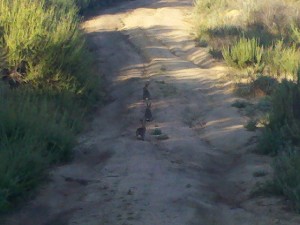
Rabbits

Maybe I should call my place Three Rabbit Estates :-)

Spread the Good News Below: Permaculture!
Posted in Uncategorized | Leave a comment

Ladybugs

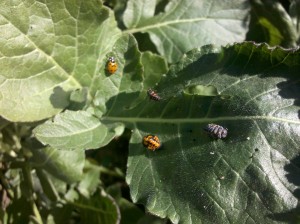
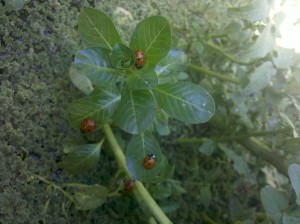
I must have thousands of ladybugs. They’re all over the stinging nettle down in the orchard. They are also all over one of my aquatic plants in constructed wetland. 1 picture is a mustard plant with 4 on it. 2 larva a pupa an adult beetle. Maybe next year I should sell some of the larva :-) they wouldn’t fly away like the ones you buy in the store do. Already acclimated to California Coastal conditions. Probably not a lot of profit margin in hand picking ladybug larvae though :-) The other picture is four adults on one of my bog plants.

by voice recognition on bob’s droid. Sorry for the Weird capitalization. Website http://www.puravidaaquatic.com/

Spread the Good News Below: Permaculture!
Posted in Uncategorized | Leave a comment

Wetland plants

I have found two more CA native plants that work in the first section of the wetland. The section with the highest amount of soap coming in. Creeping water Primrose and mares tail. Yes!

Spread the Good News Below: Permaculture!
Posted in Uncategorized | Leave a comment

Sick tree

One of my trees an Asian pear looked terrible this spring. There were bugs and aphids and little scale insects all over it. The new growth was shriveled and blackened.

I transferred a couple of ladybugs and ladybug larvae to it but they didn’t seem to be doing much good.

The Asian pear of a different variety right next to it looked great and not a juice sucker on it. There has to be a relationship to the plant’s resistance systems. In some cases the plant’s resistance must be induced by damage, or by insects sucking its juices. I would bet that some of these trees grew in a greenhouse. And were never exposed to sucking insects. I gritted my teeth and did nothing other than the addition of some more ladybug larvae.

Two months later the Pear is putting out fresh leaves and none of the new growth has any juice suckers on it. The tree looks 500% better. We should all learn to stop and observe. Permaculture should not be about instant gratification.

by voice recognition on bob’s droid. Sorry for the Weird capitalization. Website http://www.puravidaaquatic.com/

Spread the Good News Below: Permaculture!
Posted in Uncategorized | Leave a comment

Bees, wasps and other stinging insects

So I’m reading on a permaculture site ( you know, that permies site that is supposed to be so big) about people — I should say children– who want to kill everything they
A) don’t like.
B) Are afraid of
C) Think are creepy
D) Are ignorant of
E) All of the above

I work around water features which often have bees and wasps and Yellowjackets tanking up in the summertime. I walk in and out of clouds of maybe 10 to 100 insects at one time and they don’t even look sideways at me they’re busy doing their thing. And one time I reached down and picked up one of my tools and a bee stung me. I had squashed it as I picked up the tool.

Sure it freaking hurt. No I did not get mad at the bee. If I had a stinger and my life flashed before my eyes I’d probably use it too. Poor bee, been working hard all its life and some idiot squashed it. It really hurt for about 15 minutes but my auto insurance rates did not go up :-)

I am a microbiologist I have had several classes in immunology. The number of people who insist that they are allergic to bee stings is statistically incredible. If you get stung and a lump forms and it hurts — even if it _really_ hurts ^Yell at the computer mode on^ it does not mean you’re allergic. ^Yell at the computer mode off^ If you get stung and a lump forms and it hurts and the doctor tells you that you’re allergic to bee stings ^Yell at the computer mode on^ They might just be covering their butt. Because you insist that you’re allergic.^Yell at the computer mode off^

It’s like people are proud of being allergic. It is the Red Badge of Courage to be allergic to bee stings. Because that way people can rationalize about being afraid of something that is 1000 their size. Well when I was 8 I was afraid of wasps too. I’m not 8 anymore.

Everybody who wants to kill stinging insects because they’re afraid…. of being stung. Are you going to stop driving and walk everywhere now? Which is sort of a better response on a permaculture site anyway :-)

And to be on a permaculture site asking about the best way to kill them or just saying that killing them is the best way to deal with them is sort of like saying I’m a vegetarian but I’m not going to give up my bacon and eggs for breakfast and my hamburgers for lunch but I definitely want to tell everyone that I’m a vegetarian. Sigh.

Spread the Good News Below: Permaculture!
Posted in Uncategorized | Leave a comment